
The Proálcool Program
Annuj examines the role biofuels can have in our quest toward a sustainable future

Let’s set the scene. It’s 1973. There is an oil crisis. Brazil and other countries are facing energy insecurity.
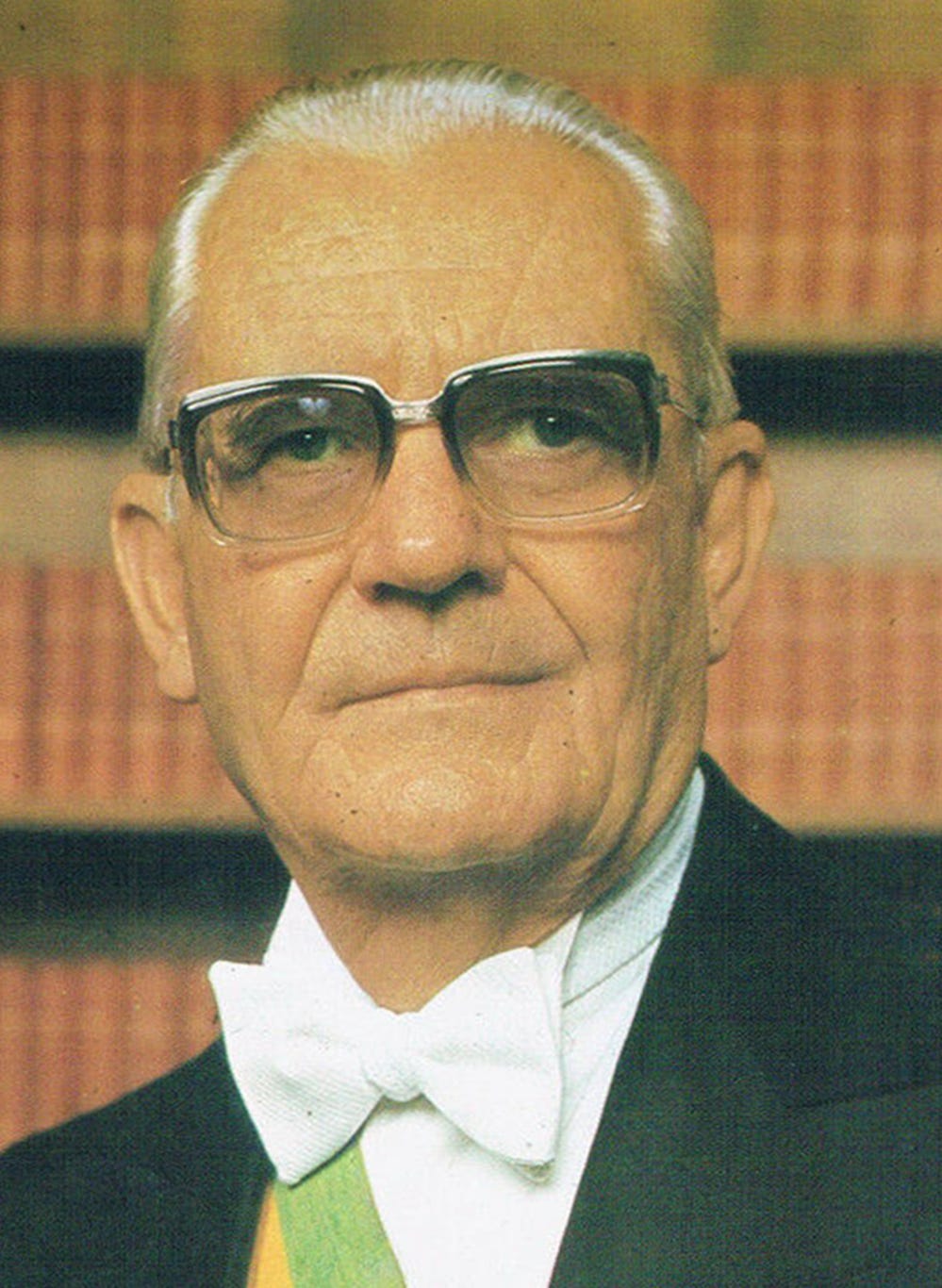
Brazil, heavily dependent on imported oil, faced energy insecurity. However, the president at the time, General Ernesto Geisel, found ideas to combat this.
Source - Wikipedia
While General Ernesto Geisel led an authoritarian regime and was criticised for it, his response to the 1973 oil crisis was positive, due to several policies he brought into play.The biggest one being The Proálcool Program.
The Proálcool Program.
The Proálcool Program was created to diversify energy needs to create less of a need on imported oil. They turned to using bioethanol as a fuel source as they had perfect conditions to grow sugarcane due to their adequate levels of rainfall and fertile land, leading to high yields of sugarcane. These crops, when harvested, are crushed to produce juice which is made out of several different compounds including sucrose, water and other compounds which are hemicellulose. They also contain other materials that do not make a significant contribution to the composition.
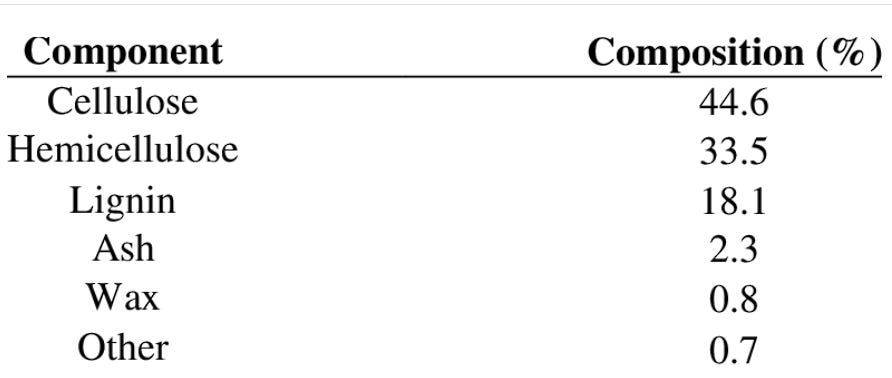
Source [1] - The composition of the squeezed sugar cane
Sucrose, a disaccharide made up of glucose and fructose, is broken by a process called enzymatic hydrolysis. This process uses enzymes to break sucrose into simple sugars. Hemicellulose refers to a group of polysaccharides, long chains of monosaccharides (glucose e.g.) that are broken down also into simple sugars. Once this process ic complete, the remaining components are ready for fermentation.
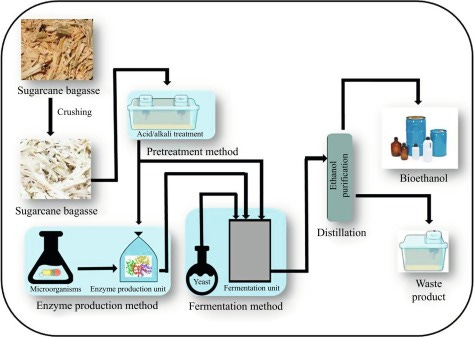
Source [2] - The process of making bioethanol
Yeast is added to the simple sugars for the anaerobic process of fermentation to occur producing impure ethanol and carbon dioxide. This ethanol has a purity of around 15% due to the yeast being unable to withstand the ethanol concentration of about 15% or above. The process of fractional distillation allows this ethanol to be separated from the mixture resulting in a 96% purity [3].
Production of ethanol was skyrocketing under General Ernesto Geisel and by the late 70s, it had become a key part of Brazil’s energy mix, accounting for around 20% of total fuels.
These fuels were used in combination with gasoline to create fuels such as E22, which represents 22% ethanol and 88% gasoline. These were then used to power automobiles, and between 1976 and 1992 the purities changed constantly between E11 to E22 until a mandate was set to create a compulsory blend of 22%. A by-product of this mandate was that E0 (gasoline) was not permitted to be sold in the country of Brazil. New cars called ‘flexible fuels’ were capable of running on any blend, with 94% of all cars being sold as flexible fuel in 2009 [4]. Running these types of combinations meant the environmental impact of cars had been reduced due to ethanol burning more efficiently compared to gasoline, resulting in lower emissions of greenhouse gases. This had taken away the dependence on imported oils, creating jobs in the process.
Positives
Decreasing oil dependency
Being dependent on fuel from other nations means the country is more vulnerable geopolitically and supply issues could have a greater impact if dependent on one type of fuel. The price of oil fluctuation could affect the entire economy of Brazil and since oil has a high volatility rate, economic vulnerability is almost guaranteed. Diversifying energy mixes decreases the countries’ vulnerability.
Job creation
The process of creating these fuels required workers to produce them, stimulating economic growth, and boosting agricultural and energy sectors. This also leads to Brazil having more exporting goods to trade to benefit the economy.
A consumer win?
Consumers can now be charged at a lower rate for fuel for their automobile vehicles and the creation of flexible fuel vehicles gave consumers more choice regarding what type of fuel they would choose.
Cons
Environmental Issues
While this program was initially praised for its wins within the renewable sector, there were environmental issues present. Land for these crops was needed and fertile land at that as well. Mass deforestation occurred around the country to allow for more land, which led to severe biodiversity loss among animal species. Soil degradation was a major criticism of the program, meaning that lands were pumped with chemicals, becoming unable to support any more crops being grown.
Farmers mistreatment
Smaller farmers were often removed forcibly from lands along with rural families. This has led to poverty increasing within some areas.
Food insecurity
Brazil, already facing food insecurity in regions, had changed a common crop into a key asset within an industry. Exacerbating already high food prices has led to food insecurity worsening within parts of Brazil.
Summary
The Proálcool Program was a success, with the dependence taken off other nations economic growth being stimulated and a crisis being averted. However the environmental impacts can not be ignored, decreasing biodiversity and overall deforestation means the effectiveness of bioethanol as a renewable fuel needs to be questioned to see if it benefits today’s society.
This article was written by Annuj. Feel to with me connect with on LinkedIn.
Nu, Thinzar & Cho, Cho. (2019). STUDIES ON SOME PHYSICOMECHANICAL AND ANTIMICROBIAL PROPERTIES OF PREPARED CELLULOSE HYDROGEL FILMS.
Swati Tyagi, Kui-Jae Lee, Sikandar I. Mulla, Neelam Garg, Jong-Chan Chae,
Chapter 2 - Production of Bioethanol From Sugarcane Bagasse: Current Approaches and Perspectives, Editor(s): Pratyoosh Shukla, Applied Microbiology and Bioengineering, Academic Press, 2019, Pages 21-42
The Manufacture of Alcohols [Internet]. Chemistry LibreTexts. 2013 [cited 2024 Aug 8]. Available from: https://chem.libretexts.org/Bookshelves/Organic_Chemistry/Supplemental_Modules_(Organic_Chemistry)/Alcohols/Synthesis_of_Alcohols/The_Manufacture_of_Alcohols#:~:text=Yeast%20is%20killed%20by%20ethanol
"Participação de carros flex nas vendas volta a bater 94%" (in Portuguese). UNICA. September 8, 2009. Archived from the original on December 9, 2012. Retrieved August 8, 2024.